IQDA Data

Launch of Growing Up in Ireland - How Families Matter for Social and Emotional Outcomes of 9-Year-Old Children

Title: How Families Matter for Social and Emotional Outcomes of 9-Year-Old Children and Growing Up in Ireland Policy Forum, with An Taoiseach, Mr. Enda Kenny T.D., and Minister for Children and Youth Affairs Ms. Frances Fitzgerald T.D.

Date: Thursday 8th March 2012
Time: 11.30am – 14.00pm
Venue: Coach House, Dublin Castle

The Growing Up in Ireland study team cordially invites you to the launch of its latest report followed by Growing Up in Ireland – A Policy Forum, with An Taoiseach, Mr. Enda Kenny, T.D. and the Minister for Children and Youth Affairs, Ms. Frances Fitzgerald, T.D.

Report Launch:The latest in a series of research reports from the study, Growing Up in Ireland – How Families Matter for Social and Emotional Outcomes of 9-Year-Old Children, will be launched by Ms. Frances Fitzgerald T.D., Minister for Children and Youth Affairs.

Policy Forum: The report launch will be followed by a policy forum on issues arising from the Growing Up in Ireland study. The forum will be addressed by members of the Study Team, Senior Policy Makers, An Taoiseach, Mr Enda Kenny T.D. and Minister Frances Fitzgerald T.D.

Detailed schedule to follow.

RSVP: Claire Delaney at GUIlaunch@esri.ie by Monday 5th March 2012

Growing Up in Ireland is a Government study. The Department of Children and Youth Affairs is funding it in association with the Department of Social Protection and the Central Statistics Office. The Department of Children and Youth Affairs is overseeing and managing the study, which is being carried out by a consortium of researchers led by the Economic and Social Research Institute (ESRI) and Trinity College Dublin.


»

Book Launch: Suburban Affliations

Title: Book launch of Suburban Affiliations, Social Relations in the Greater Dublin Area by Mary P. Corcoran, Jane Gray & Michel Peillon
Date: Tuesday, 28th September 2010 at 6pm, book launch introduced by David McWiliams
Venue: Royal Irish Academy, 19 Dawson Street, Dublin 2

Data from this project is being archived in the IQDA. If you are interested in urban and suburban life in Ireland, and want to draw on this data for your own project, this launch is a great opportunity to meet the researchers and find out more about their research process.


»

IQDA Themes

_________________________________________________________________________
IQDA is an important resource for preserving and understanding the contemporary social history of Ireland. Every few months, on this page, we illustrate how the social science data we archive sheds light on a particular theme, and we also invite you to share your own experiences relating to the topic through our blog. 
_________________________________________________________________________
 
PUTTING THE CHILDREN REFERENDUM IN THE CONTEXT OF FAMILY CHANGE

Download Full Research Briefing
Uploaded: 09/11/2012
Ruth Geraghty
 
The Family Rhythms project aims to re-vision family change in modern Ireland in light of recent theoretical developments, through an in-depth analysis of newly available qualitative data resources held in the Irish Qualitative Data Archive. The Family Rhythms project has been funded by a Government of Ireland Senior Research Fellowship from the Irish Research Council for the Humanities and Social Sciences. Learn more about the Family Rhythms project
 
On Saturday, the 10th of November 2012, the people of the Irish Republic are called to vote in The Children Referendum, regarding the explicit recognition of the rights of the child by the Constitution of Ireland (see www.referendum2012.ie).
 
At the heart of the Children Referendum is a transformation over the course of the last century in the way that childhood is viewed in Irish society. Some of the conditions that we consider normal for a happy, safe and fulfilling early life today are quite different to what past generations have considered normal in childhood.
 
Using the datasets of two national studies that are archived at IQDA (1) Life Histories and Social Change (LHSC) and (2) Growing Up in Ireland 9 year old cohort (GUI), we can explore four generations of childhood that span the 75 years of the Constitution of Ireland, exploring why an Article written in 1937 is on the agenda for reconsideration in 2012. 
 
Aspect 1: Marital Status and Parenthood
During their own lifetimes the majority of respondents in the Life Histories and Social Change (LHSC) project had witnessed dramatic changes in family forms in Ireland. Particularly for the oldest respondents, by the time they are interviewed in the late 2000s, the rules and norms of courtship and marriage had become unrecognisable to them; 


Changing societal attitudes to the birth of children outside of marriage is particularly striking, when examined across the decades. Stories from the early twentieth century are saturated with secrecy and shame for both the pregnant woman and her family; 


By 1980s the remnants of concealing an out of wedlock pregnancy persisted for many women while they decided what course of action to take;


By the 2000s dramatic changes in family forms were underway in Ireland, with increases in non-traditional households of single parents, and non-marital families, to the extent that children could talk openly about this; 


Aspect 2: Parental Duty 
 
In past generations, it was expected that children who were well raised would be courteous and well behaved in the presence of adults; 


Both the threat and deployment of corporal punishment were commonly used to maintain respect of elders. It was expected that the punishment imposed on children in the classroom would be supported by parents in the home; 


Amongst modern day parents, the use of corporal punishment had become socially unacceptable to the extent that any form of slapping, spanking or physical retribution was never mentioned or alluded by parents. Instead restrictive discipline, such as 'grounding' or removal of toys and privileges was deployed, although some parents appeared perplexed as to how to impose this kind of discipline;


In some accounts it was possible to see differences between the discipline deployed by the older generation on their grandchildren and that deployed by the child's own parents; 


Aspect 3: Fostering and Adoption of the Children of Married Parents
 
During the early twentieth century a culture of large families often left parents very stretched when providing for their families and it was common practice to send the oldest children away to live with unmarried relatives on the arrival of a new baby; 


Poverty, especially after the death of one parent could lead to the separation of families between concerned relatives, and this sometimes resulted in long term broken the links between siblings; 


Aspect 4. Listening to the Views of Children
 
Although parents today continue to monitor and restrict the exposure of their children to knowledge deemed too adult for their age, in previous generations there was a much stronger distinction between the conversational world of adults and that of children; 


In many households clamour and commotion of young children around the dinner table was not tolerated, and communal meals at the dinner table could be seeped in tension; 


Modern day parents, on the other hand, often encouraged their children to talk to them, using specific daily events such as dinnertime or bedtime for intimate conversation. Many parents also took great pleasure in hearing their children's questions, stories and opinions; 


Some modern day parents described 'democratic parenting' in the home, where children could voice their opinions on decision made by parents. 


Download Full Research Briefing
 
The Family Rhythms project aims to re-vision family change in modern Ireland in light of recent theoretical developments, through an in-depth analysis of newly available qualitative data resources held in the Irish Qualitative Data Archive.
 
Learn more about the Family Rhythms project
 
 
_______________________________________________________________________
 

THE THEME OF CHILDHOOD AND PLAY 
 
Childhood play might not seem like a very serious topic for a social science archive, but researchers have increasingly emphasized how children actively contribute to changing patterns of social life. Play is one of the ways in which children interpret their place in society, create their own peer cultures and participate in social change. Datasets currently being archived at IQDA include insights on the following areas.
 
Memories of toys and popular games 
Older respondents in the ‘Life Histories and Social Change’ project drew contrasts between the simple toys and games of the recent past, and contemporary children’s play:


Changing time and space for play

During the 1930s and forties, rural children had little time to play before or after school, because of the many jobs they had to do around the farm. But they still found ways to create their own childhood worlds: 


The Celtic Tiger

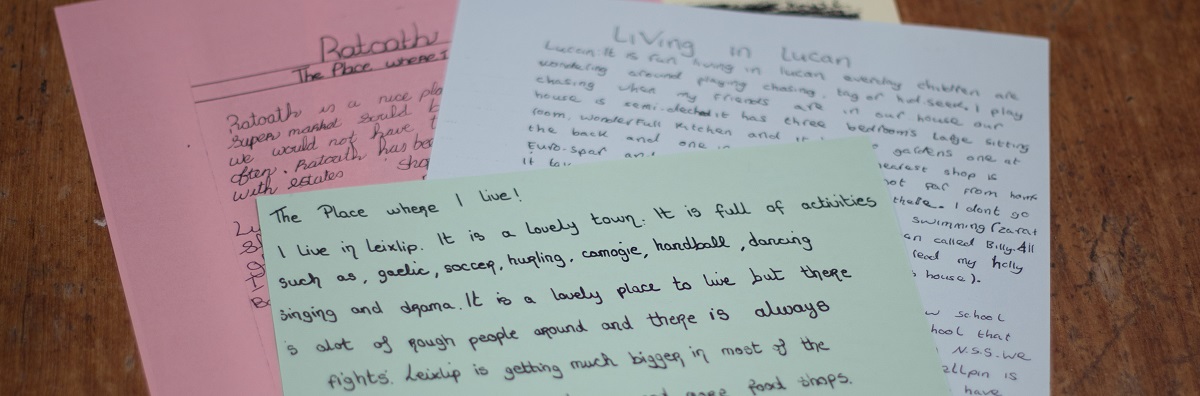
During the ‘Celtic Tiger,’ children living in the new suburbs around Dublin had more time to play, but less space as illustrated in the shoolchildren's essays below, from the ‘New Urban Living’ project.


Play and social divisions
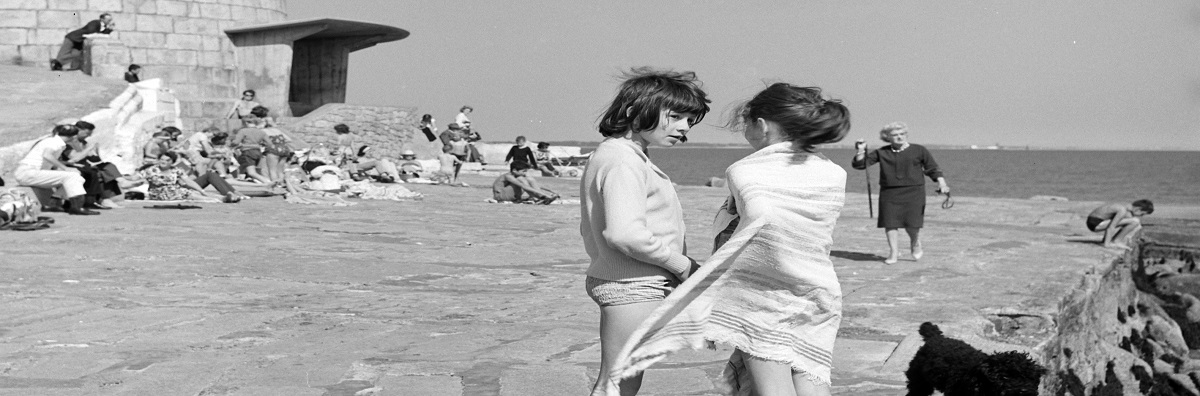
The social divisions that mark adult society can restrict children’s play, but children also find ways to interpret and manage those divisions, as remembered by some older respondents in studies hosted by the archive.


Life Histories and Social Change in 20th Century Ireland

Depositors:
Prof. Sean Ó Riain (Department of Sociology and NIRSA, NUI Maynooth), Dr Jane Gray (Department of Sociology and NIRSA, NUI Maynooth), Dr Aileen O'Carroll (Department of Sociology and NIRSA, NUI Maynooth)
 
Description:
In this project qualitative interviews were conducted with a large sample of Irish people from three key birth cohorts: 1929-1934; 1949-1954 and 1969-1974.
 
Listen to audioclips from Life Histories and Social Change. (Sound clips here are taken from interviewees who indicated on their ethical consent forms that they were willing to be identified.)
 
These cohorts enabled us to interview people reaching adulthood in the crucial decades of the 1950s (an era of socio-economic decline), the 1970s (an era of initial "modernisation") and the 1990s (the "Celtic Tiger" boom). The interviews included both a qualitative, ethnographic component, in which the respondent framed the life history according to the events, circumstances and interpretations that are significant to him or her, and a systematic component (life history calendars and network schedules) that will provide comparable data across cases. The interviewees were selected from a nationally representative sample of people interviewed from 1994-2001 for the Irish part of the European Community Household Panel Survey.
 
Access this dataset
View Catalogue Record for Life Histories and Social Change
 
Clips from the Life Histories and Social Change project were used in the development of the IQDA Teaching Resources
 
 
Status:
Phase one and phase two archiving completed and interview transcripts are now available. Some of the interviewees have agreed to being publicly identified. However the majority of the data will only be available to bona fide researchers who have signed legal access agreements that guarantee ethical re-use of the data. Access to a small number of the interviews maybe closed for a number of years.


Book Launch: Outside the Glow. Protestants and Irishness in independent Ireland

UCD Press is holding a book launch for Outside the Glow, Protestants and Irishness in Independent Ireland by Heather K Crawford, in Newman House, 86 St Stephens Green, Dublin 2 on Monday the 8th March at 6 pm.
We are currently working with Dr Crawford to prepare the interviews that book is based on for depositing in the IQDA.
 
Aileen O'Carroll


»
Syndicate content

Irish Qualitative Data Archive
c/o National Institute for Regional and Spatial Analysis (NIRSA), IONTAS Building,
National University of Ireland Maynooth,
Maynooth, Co. Kildare, Ireland  
 
IQDA site design and management:
Ruth Geraghty: Ruth.Geraghty[at]nuim.ie
Aileen O'Carroll: Aileen.OCarroll[at]nuim.ie
Enquiries: iqda[at]nuim.ie