Access Data
In order to access and use the data held at the Irish Qualitative Data Archive, end-users must complete a Data Access Form and sign a legal agreement with the IQDA.

Download IQDA Data Access Request Form and Agreement on Conditions of Use
_______________________________________________________
To access the data please complete the following steps
- Download the IQDA Data Access Request Form and Agreement on Conditions of Use
- Read and complete the IQDA Data Access Request Form. Be sure to indicate the dataset(s) to which access is requested.
- Read and complete the IQDA Agreement on Conditions of Use
- Return both completed forms to the IQDA at the following address:
IQDA c/o NIRSA,
IONTAS Building,
National University of Ireland Maynooth,
Maynooth,
Co. Kildare,
Ireland
If you have any queries please contact us by email at iqda@nuim.ie / call +353 1 708 6171
_______________________________________________________
CURRENTLY AVAILABLE
The following datasets are currently available from the Irish Qualitative Data Archive
Outside the Glow. Protestants and Irishness in Independent Ireland
Depositor: Heather K. Crawford
Short Description: This oral history examined the relationship between Protestants and Catholics and the notion that southern Protestants are somehow not really Irish. The dataset comprises of over a hundred interviews conducted throughout Ireland.
The Second World War and Irish Women
Depositor: Mary Muldowney (Trinity College Dublin)
Short Description: This oral history examines the experiences of a group of Irish women during the Second World War. Twenty-seven women drawn from a range of social classes and urban and rural backgrounds were interviewed.
Life History and Social Change in 20th Century Ireland
Depositors: Sean Ó Riain (National University of Ireland Maynooth), Jane Gray (National University of Ireland Maynooth), Aileen O'Carroll (National University of Ireland Maynooth)
Short Description: In this project qualitative interviews were conducted with a large sample of Irish people from three key birth cohorts: 1929-1934; 1949-1954 and 1969-1974. These cohorts enabled us to interview people reaching adulthood in the crucial decades of the 1950s (an era of socio-economic decline), the 1970s (an era of initial "modernisation") and the 1990s (the "Celtic Tiger" boom).
Depositors: James Williams (Economic and Social Research Institute), Sheila Greene (Trinity College Dublin), Erika Doyle (Trinity College Dublin), Elaine Harris (Trinity College Dublin), Rory McDaid (Marino Institute of Education), Sinéad McNally (Trinity College Dublin), Brían Merriman (Trinity College Dublin), Elizabeth Nixon (Trinity College Dublin), Lorraine Swords (Trinity College Dublin).
Short Description: Growing Up in Ireland is a longitudinal study which follows two cohorts of children, aged nine months and nine years. The study was officially launched in 2007 and will be completed in 2013. There is an embedded qualitative module, the data from which will be archived in the Irish Qualitative Data Archive. The data includes children’s interviews, transcripts of the parents’ interviews, field notes for each family and visual data consisting of the contents of time capsules created by the children. This involves a range of worksheets and drawings.
Depositor: Mark Boyle (National University of Ireland Maynooth)
Short Description: This oral history archive consists of 67 interviews with members of the Irish Catholic community in Scotland. Attention is given to the themes of national identity, estrangement and belonging; diasporic imaginings of Ireland; anti-imperial activism, agitation and advocacy; culture, faith and family; and poverty, work education and equality.
Ned Cassidy Photographic Archive
Depositor: Edward Cassidy (In association with Dr. Brendan Bartley Department of Geography and NIRSA, NUI Maynooth and the Irish Architectural Archive)
Description: The Ned Cassidy Photographic Archive comprises more than 30,000 photographs relating to various aspects of the built environment for all towns and settlements across the Republic of Ireland with a population of more than 500 people. The photographs cover the period from the 1970s to the present day and were compiled systematically by Edward Cassidy who served as Planning Officer with An Bord Pleanala in the 1980s and was Chief Planning Advisor at the Department of the Environment and Local Government before his retirement in the 1990s. The Archive is the only known photographic repository which contains images for a full set of towns in Ireland for this period. Most of the images are in hard copy format and the IQDA is producing high quality digital copies of the original hard images provided by Ned Cassidy to facilitate on-line electronic access to the Archive.
Depositors: Various (Irish Qualitative Data Archive, National Institute for Regional and Spatial Analysis)
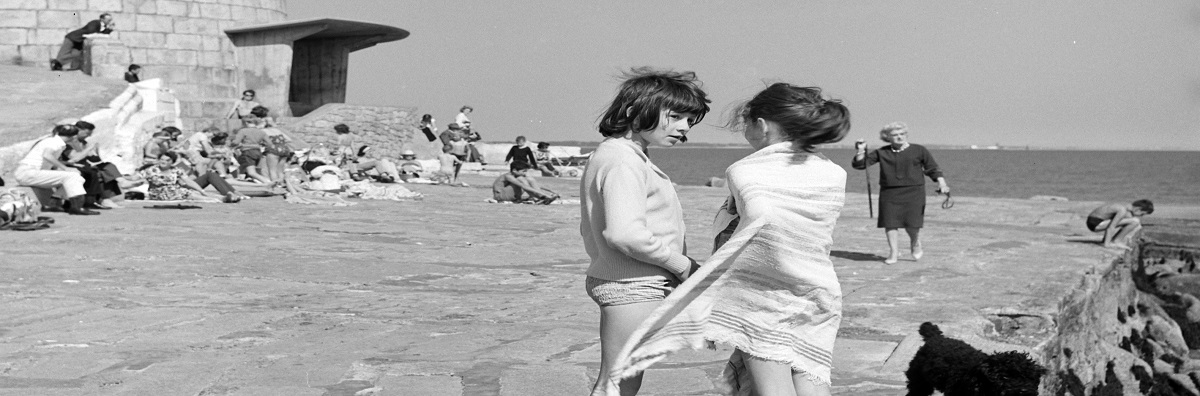
Short Description: The archive contains over 6,000 images captured by staff at the IQDA and NIRSA. The NIRSA Photo Archive is a photographic record of the people and places of Ireland, both North and South. The Archive has an emphasis on society, economy and environment, and seeks to capture the everyday landscapes and activities of Irish life. It is an ongoing project, with many new photographs added each month.
_______________________________________________________
IN PREPARATION
The following datasets are currently in preparation for deposition at the Irish Qualitative Data Archive
Suburban Affiliations; Social Relations in the Greater Dublin Area
Depositors: Mary P. Corcoran (National University of Ireland Maynooth), Jane Gray (National University of Ireland Maynooth) and Michel Peillon (National University of Ireland Maynooth)
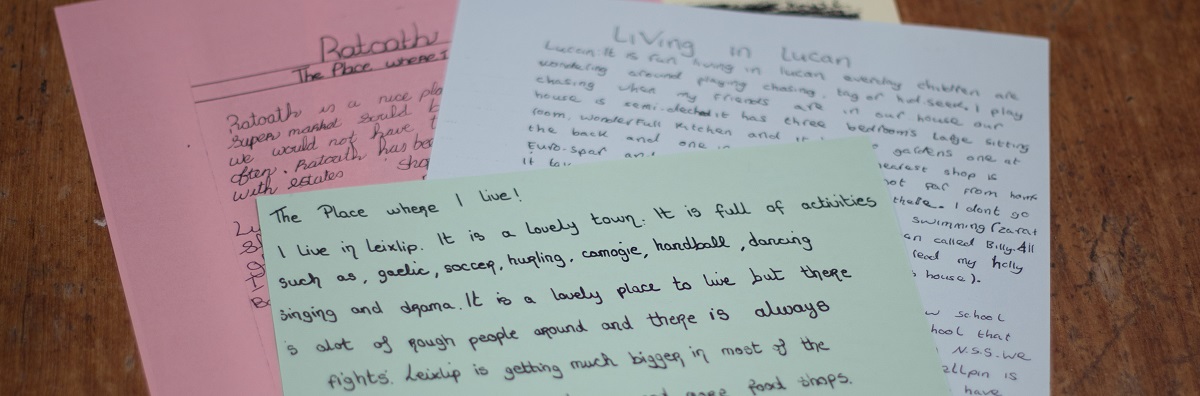
Short description: Quantitative and qualitative data were collected in four study areas: Leixlip, County Kildare; Lucan, County Dublin; Mullingar, County Westmeath and Ratoath, County Meath. The qualitative data include interview notes and/or transcripts from thirty focus groups conducted with Active Age Groups, Parent and Toddler Groups, Sixth Class Primary School Pupils (who also contributed essays on ‘The Place Where I Live’); an intercultural group (Lucan-Esker) and women participants on a training scheme (Mullingar). There are also in-depth interview notes and/or transcripts from key informants and community activists in each study area.
The Career Trajectories, Self Identities and Re-settlement Strategies of Returning Irish Migrants
Depositor: Mary P. Corcoran (National University of Ireland Maynooth)
Short Description: Irish migration at the turn of the twenty-first century encompassed many complex and multi-dimensional processes. Whereas Irish emigrants were once drawn almost exclusively from the agricultural and laborer classes, in the closing decades of the twentieth century emigration came to permeate the entire social system. Thus, Irish migrants are to be found not just among the ranks of skilled and semi-skilled labor, but also among the trans-national professional elite that crisscrosses the globe. In recent years, considerably more people entered Ireland than left, bringing the country's migratory profile more into line with its European partners. This dataset comprises 20 qualitative interviews with a cross-section of emigrants who left Ireland in the 1980s and returned in the 1990s. The interviews were carried out in late 1997 and early 1998. Particular attention was paid to motivations for leaving and their experiences abroad in terms of professional and personal development.
Towards a Dynamic Approach to Research on Migration and Integration
Depositor: Mary Gilmartin (National University of Ireland Maynooth), Bettina Migge (University College Dublin)
Short Description: This longitudinal qualitative study of migrants to Ireland will track sixty migrants, from two migrant cohorts over a two year period, through interviews, observation, shadowing and visual methods. The project will, for the first time, provide detailed information on migrants and their experiences of integration in Ireland over an extended period, using an interdisciplinary framework that, in turn, will provide the basis for extended studies and international comparative research.
RACcER: Re-use and Archiving of Complex Community-Based Evaluation Research
Depositor: Tallaght West Childhood Development Initiative
Short Description: As part of a solutions-based 10-year strategy, Tallaght West Childhood Development Initiative (CDI) commissioned the delivery of five services and initiatives in Tallaght West that are being rigorously evaluated by six independent evaluation teams that include senior researchers from a range of higher education institutes in Ireland and the United Kingdom.
.png)
IQDA EDUCATION RESOURCES
Collection of audio and visual material covering a series of sociological topics. The IQDA Learning Resources work as a self-guided learning tool for students.
Collection of audio clips that educators can use in the classroom. Educators can also apply to the IQDA for access to transcripts for teaching purposes.
IQDA RESEARCH RESOURCES
Collection of resources for researchers preparing to deposit qualitative data, and conducting secondary analysis on qualitative data.
Best Practice Handbook
IQDA Anonymisation Tool
Re-Using Qualitative Data Workshop, June 2012
PHOTO ARCHIVE
Navigation
User login
Tags in Research
Event Cloud Tag
Recent blog posts
- Ethnicity, Human Rights & Data Collection
- Incorporating Research Evidence into Academic Learning - A Seminar for Third Level Institutions
- Is family influence declining? The impact of parents and grandparents over 35 years
- National & Transnational Cultural Flows & Place, Postgraduate Summer School
- Munster Oral History Forum, Saturday 27 April 2013
- International Summer School in Qualitative Research Methods in Education, IV Edition
- Qualitative longitudinal data analysis: a research methods training day
- Writing across Boundaries Workshop, April 2013
- Bridging qualitative, quantitative and spatial datasets: a configurational approach to multisource coding
- Archiving consultancy post with CDI